
Disclaimer:
The information on this website is for general guidance only and does not constitute financial or investment advice. Always do your own research and seek personalised advice from a qualified financial adviser or mortgage adviser before making financial decisions. All investments carry risk and past performance is not indicative of future results.
Key Takeaways
- A meaningful deposit plus good saving habits signals financial readiness.
- Stable, well-documented income gives lenders clearer evidence for affordability checks.
- Reducing personal debt can improve affordability because lenders assess debt, expenses and credit history.
- Mental and emotional readiness is just as important as financial preparation.
- Clarity on affordability and a realistic buying plan can turn uncertainty into practical next steps.
For many first home buyers in New Zealand, the idea of buying a home can feel both exciting and overwhelming at the same time. You might be watching the market closely, browsing listings, and imagining what it would be like to finally have a place of your own. At the same time, you may be unsure whether now is truly the right time to take that step.
Readiness is not just about whether you can technically get a mortgage approval. It is about whether your finances, lifestyle and expectations are aligned with the realities of home ownership. Buying before your budget can cope may place pressure on your finances and wellbeing. Waiting can also have trade-offs. The goal is not to time the market perfectly, but to understand your own readiness clearly.
The following five signs provide a grounded framework to help you assess whether you may be in a strong position to explore buying your first home in New Zealand. If you can confidently relate to most of these, you may be closer to being ready than you think.
1. You Have a Meaningful Deposit, With a Clear Path Forward
One of the most common questions first-home buyers ask is, "How much deposit do I actually need?" Kāinga Ora says most lenders currently require a minimum 20% deposit, and the Reserve Bank treats owner-occupier loans above 80% LVR as high-LVR lending. A lower deposit may still be possible, but it depends on lender criteria, product settings and any low-equity costs or conditions.
In practice, some buyers enter the market with less than 20%. Kāinga Ora says the First Home Loan can lower the required deposit to 5% for eligible buyers through participating lenders, and some participating lenders may allow new builds under their criteria. What matters most is not just the number, but the sustainability of your position after you buy. If stretching to a low deposit leaves no buffer for rate changes, maintenance costs or lifestyle changes, you may technically be able to buy, but still be financially uncomfortable.
A strong sign of readiness is not simply having a deposit sitting in your account, but understanding how that deposit interacts with lender criteria and overall buying power. This includes estimating how much you may be able to borrow, what purchase price range may be realistic, and how much to hold back for costs such as legal fees, building reports, valuations and moving expenses. Many first-home buyers underestimate these additional costs and can end up in a tighter position than planned.
Being deposit-ready also means you have formed saving habits. The discipline required to build a deposit can help with the discipline needed to manage a mortgage long-term. If you have demonstrated that you can consistently set aside money while still living your life, you are building useful habits for home ownership.
2. You Have Regular and Stable Income That Banks Can Rely On
A deposit alone is not enough to secure a mortgage. Lenders must assess whether lending is affordable and suitable, and that includes income, expenses, debt and credit history. Regular, stable and well-documented income can be a useful readiness indicator, but it does not guarantee approval.
Stability does not necessarily mean you must have been in the same job for decades. It means your income is predictable, ongoing and well documented. For salaried employees, this is often straightforward. For contractors or self-employed buyers, readiness may come down to whether you have enough evidence of income history, consistency and sustainability for the lender you choose.
Being income-ready also means your income supports the lifestyle you want after you buy. It is one thing to qualify for a loan on paper. It is another to feel comfortable making repayments while still enjoying life. A good sign of readiness is when your projected mortgage repayments fit within your budget without forcing you to sacrifice everything that matters to you. If buying a home would leave you constantly stressed about money, the timing may be financially possible but emotionally premature.
It is also worth noting that lenders apply their own criteria when checking affordability. Your real-world spending may feel manageable now, but lenders still need to be satisfied that required repayments are likely to be affordable without substantial hardship. Being ready means understanding that repayments and costs can change, and checking whether your income has enough breathing room over time.
Need personalised guidance?
Chat with a First Home Buyers Club affiliated mortgage adviser - no obligation!
Have a question about this?
Post it in the First Home Buyers Club forum — get answers from the community and industry professionals.
3. You Have Little or No Personal Debt and Understand Its Impact on Affordability
Personal debt can play a significant role in home loan affordability. Credit cards, personal loans, car loans, overdrafts and other commitments can affect how a lender assesses your application. Consumer Protection says lenders must check affordability and suitability, and Kāinga Ora says First Home Loan lenders may consider current debt and credit history. Avoid relying on a fixed debt-to-borrowing ratio, because the impact varies by lender and by application.
A strong sign that you may be better prepared is when you have intentionally reviewed non-essential personal debt. This does not mean you must be completely debt-free, but it does mean you understand the trade-offs. Clearing a car loan, reducing credit-card limits, or paying down personal loans may improve affordability, but the result depends on lender policy, your income, expenses, credit history and the property.
Reducing debt can also improve monthly cashflow. Lower commitments may mean mortgage repayments take up a smaller portion of your budget, which can reduce pressure and improve resilience. Buyers who enter home ownership with fewer personal-debt commitments may find it easier to cope with rate changes, maintenance surprises, and lifestyle changes such as having children or changing jobs.
If you have not yet addressed your personal debt position, this does not automatically mean you are far from being ready. It may mean there is a practical step to review before relying on a borrowing figure. Clearing or restructuring debt can help some buyers move from "almost ready" to better prepared, but the right approach depends on the borrower and lender.
4. You Are Mentally and Emotionally Ready for the Reality of Home Ownership
Financial readiness is only part of the picture. Buying your first home is emotionally demanding. It involves competition, rejection, negotiation, compromise, and uncertainty. A key sign of readiness is being mentally prepared for the process itself, not just the outcome.
This includes accepting that your first home may not be your forever home. Many first home buyers enter the market with expectations that are better suited to a second or third purchase. Being mentally ready means understanding that your first home is often about getting on the ladder, building equity, and learning the realities of ownership. Compromises around location, size, or condition are common, and emotionally mature buyers recognise this as part of the journey rather than a failure.
Mental readiness also means being prepared for setbacks. Offers fall through. Auctions can be intense. Properties that feel perfect can be lost to other buyers. If you are entering the market during a period of personal stress, instability, or burnout, the emotional load of buying may feel heavier than expected. A strong sign of readiness is feeling grounded enough to engage with the process without it taking over your wellbeing.
Another overlooked aspect of mental readiness is long-term commitment. Home ownership comes with responsibility. Maintenance, rates, insurance, and unexpected repairs are part of the package. Being ready means accepting that owning a home is not just about lifestyle freedom, but about stewardship of a significant asset and long-term financial commitment.
5. You Have Clarity on Your Affordability and a Realistic Buying Plan
A useful sign that you may be ready to explore buying is having clarity on what you can afford and how you plan to buy. This goes beyond online calculators and rough guesses. Settled.govt.nz says mortgage calculators are guides only, and conditional pre-approval can confirm the price range you can buy in, subject to later property and lender checks.
This clarity often comes from having your numbers reviewed and understanding how lender policies, loan-to-value restrictions, debt-to-income restrictions and interest rate structures may affect your options. Many first-home buyers wait until they have found "the one" before they seek clarity on affordability, only to discover that their expectations and potential borrowing range do not align. Doing this work upfront can reduce the chance that emotions drive the process.
A buying plan also includes understanding the different ways you can buy. Auctions, price by negotiation, and new builds all come with different risks, conditions and timelines. Settled.govt.nz says conditional pre-approval is needed if you are taking out a home loan to buy at auction, and even with conditional pre-approval lenders usually need property information before confirming the loan. Understanding these pathways before you attend open homes can save time, money and emotional energy.
Clarity also extends to understanding that mortgage structures can differ. The FMA says mortgage advisers can walk borrowers through options, features and loan structure, and advisers must explain what their advice covers, how they are paid, and any fees or commissions. Thinking about structure early can help, but the suitable option depends on your circumstances and advice scope.
What Readiness Really Means in the Real World
Many first-home buyers do not feel one hundred percent ready. There will often be uncertainty, trade-offs and unknowns. Readiness is not about perfection. It is about alignment. When your finances, mindset and plan are aligned with the reality of buying a home in New Zealand, the process can become more manageable and less overwhelming.
Many buyers wait for ideal market conditions, the ideal property, or an ideal financial situation. In reality, progress often comes from building readiness gradually and recognising when it may be reasonable to explore the next step. The key is to move forward intentionally, with clarity and support, rather than reacting emotionally to market noise.
If you are unsure where you sit on this readiness spectrum, practical tools such as our Home Readiness Quiz, a structured first-home buying plan, and personalised affordability feedback can help turn uncertainty into direction. Treat tools and adviser feedback as guides, then confirm borrowing, property details, insurance and final approval with your chosen lender.
From Thinking About Buying to Taking Confident Action Reaching the point where you may be ready to buy your first home is less about ticking boxes and more about building confidence through understanding. When you have a workable deposit strategy, stable income evidence, manageable debt, the right mindset, and a clear plan, the leap into home ownership can feel less daunting. Instead of treating readiness as a yes-or-no question, focus on the evidence, options and trade-offs in front of you. Take our Home Readiness Quiz to find out where you stand, or book a consultation with one of our advisers to get personalised guidance, including what the advice covers and any fees or commissions that may apply.
Have a first-home-buyer question?
Browse related forum discussions
Public forum questions are searchable, with answer previews for visitors and full discussions for free members.
Frequently Asked Questions
Need personalised guidance?
Chat with a First Home Buyers Club affiliated mortgage adviser - no obligation!
Have a question about this?
Post it in the First Home Buyers Club forum — get answers from the community and industry professionals.
Related Articles

How Much Deposit Do I Need as a First Home Buyer?
Comprehensive guide on deposit options from 5% to 20% for first-home buyers. Learn about First Home Loans, YouOwn, and new build options.
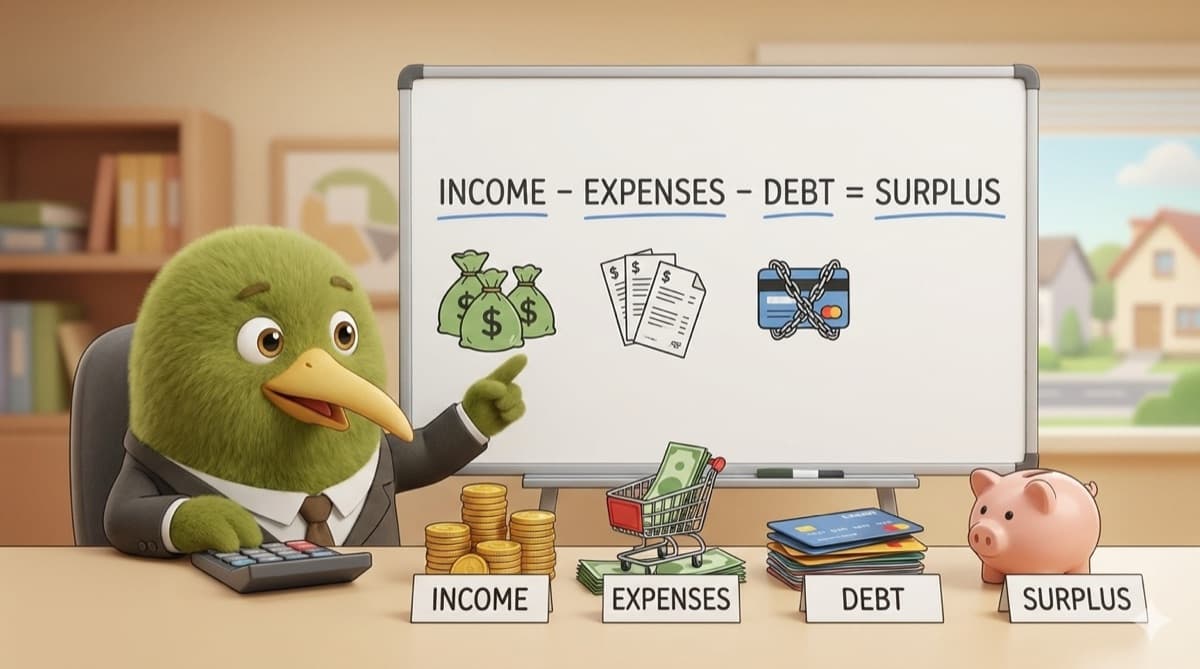
How Do Banks Calculate Home Loan Affordability?
Essential guide on how banks calculate home loan affordability. Learn about income, expenses, debt, and the debt servicing test.
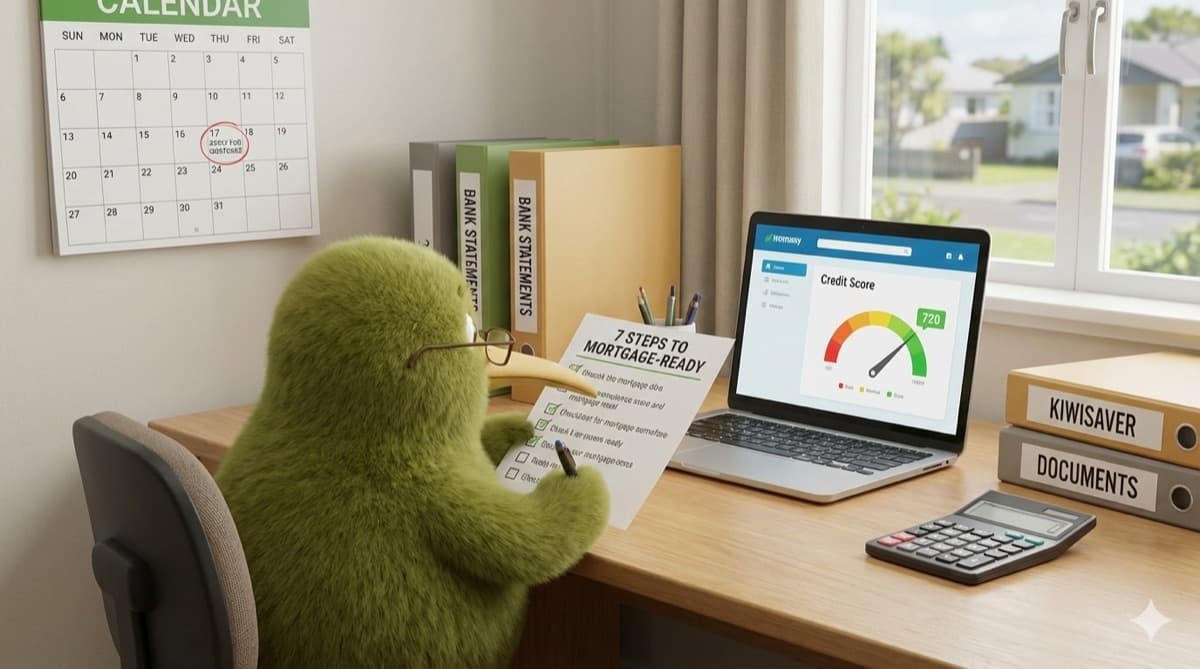
7 Steps to Get Mortgage-Ready for Your First Home
Essential 7-step guide to prepare for mortgage approval. Learn about documents, credit checks, employment verification, and expert strategies.

Want To Afford Your First Home Mortgage? Make Sure You Have a Monthly Surplus
Essential guide on maintaining a monthly financial surplus to afford mortgage repayments. Learn how to calculate and improve your surplus.