Disclaimer:
The information on this website is for general guidance only and does not constitute financial or investment advice. Always do your own research and seek personalised advice from a qualified financial adviser or mortgage adviser before making financial decisions. All investments carry risk and past performance is not indicative of future results.
Key Takeaways
- Use recent bank statements to understand real spending patterns.
- Calculate total monthly income and average variable expenses.
- Group expenses into categories to see where savings may be realistic.
- Set clear goals such as debt repayment, emergency savings, and a house deposit.
- Prioritise spending and consider separate accounts or automatic payments where they fit your budget.
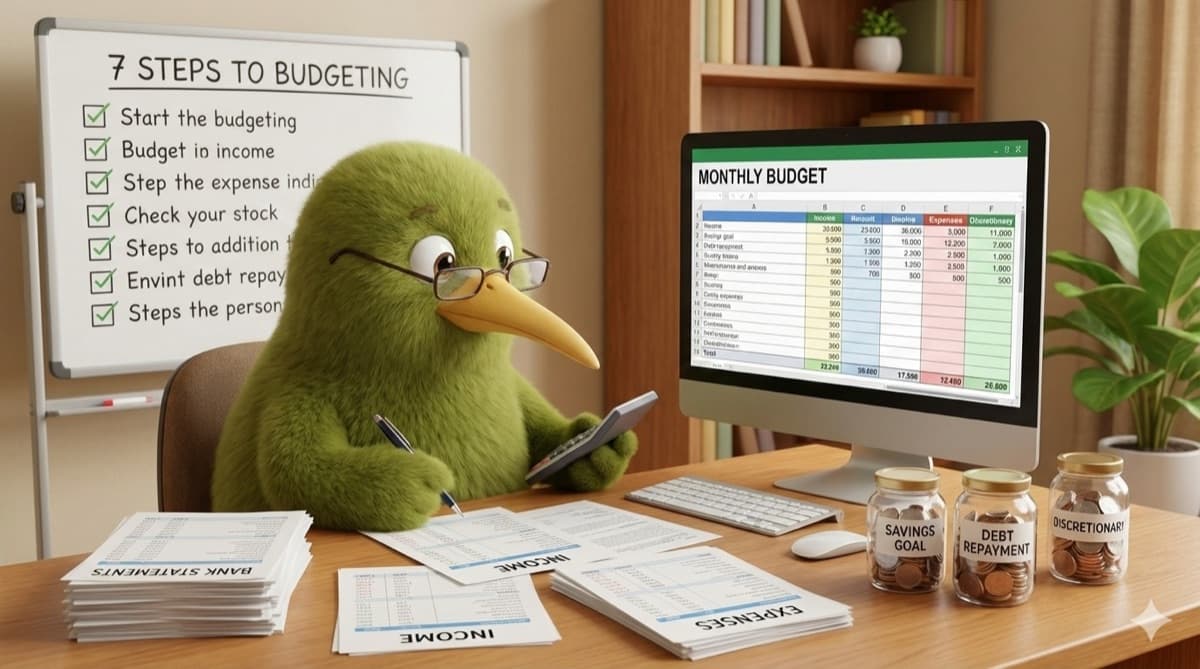
When saving for your first home, creating a budget can help you manage your finances more clearly. Sorted describes a budget as a plan for spending and saving; for first-home buyers, that means tracking income, expenses, debt repayments, emergency savings and deposit progress. Here is a step-by-step guide to help you create a monthly budget:
Step 1: Bank Statements
Print or export your past 3 months of bank statements.
TIP: Create your budget using a spreadsheet program like Excel or Google Sheets, or consider using an online budgeting app. Sorted's free budget planner can help chart incomings and outgoings, show essential and non-essential items, and identify surplus or shortfall.
Step 2: Your Income
To calculate your total monthly income, it is important to gather all sources of regular income that you receive. This includes your salary or wages from your job, dividends from investments, and any other consistent sources of income.
Once you have gathered all this information, add up the amounts to determine your total monthly income. This will give you a clear understanding of how much money you have coming in each month.
By knowing your total monthly income, you can then create a budget that reflects your bills, debt repayments, savings goals and deposit timeline. This can help you make more informed decisions about how to allocate money and prioritise spending.
Step 3: Your Expenses
To get a clear understanding of your spending habits, it is essential to jot down all of your regular expenses over the past three months. This will provide you with an accurate picture of where your money is going. However, for expenses that vary from month to month, such as your power bill, work out the average monthly amount.
By examining your bank statements, you can also identify patterns in your spending and gain insights into your financial habits. This process allows you to see how much you typically spend on categories like groceries, transportation, utilities, entertainment, and personal expenses. It may also help you spot non-essential spending that could be trimmed if it does not fit your goals.
Moreover, analysing your expenses over a three-month period provides a more accurate representation of your financial situation compared to just a single month. It helps account for any irregular or unforeseen expenses that may have occurred during that period.
TIP: Categorize Your Expenses
- Rent
- Food (Groceries and takeaways)
- Transportation
- Utilities
- Entertainment
- Personal expenses
- Debt repayments
- Subscriptions
- Insurances
- Childcare / Education
- Donations
By deducting your total monthly expenses from your total monthly income, you can see whether there is money left for everyday spending, extra debt repayments, emergency savings or a deposit goal. If your outgoings are more than the money coming in, you have a shortfall and may need to reduce costs, increase income, change timelines or seek budgeting/debt help.
Once you know where you stand, you can decide whether any adjustments to spending, saving, debt repayment or goals are realistic.
Need personalised guidance?
Chat with a First Home Buyers Club affiliated mortgage adviser - no obligation!
Have a question about this?
Post it in the First Home Buyers Club forum — get answers from the community and industry professionals.
Step 4: Set Financial Goals
Add your financial goals to your budget. These could include paying off debt, building emergency savings, saving for a house deposit, or planning for another future cost. Clear goals can make it easier to test whether your budget matches your priorities.
- Debt repayments may need priority where interest, fees or lender obligations make them urgent. By including repayments in your budget, you can allocate a realistic amount each month and seek help early if repayments become hard to meet.
- Saving for a house deposit is another common financial goal. By adding this to your budget, you can estimate how much you may need to save each month to reach a target deposit amount and timeframe, while still allowing for essential costs and emergency savings.
- Building emergency savings can help with unexpected expenses, such as your car breaking down. Sorted suggests starting with an emergency fund of $1,000, then building towards three to six months of expenses where possible.
Remember, it is useful to regularly review and adjust your budget as necessary. Life circumstances may change, and new goals may arise, so flexibility is key. Monitoring your budget can show whether you are making progress, but it cannot guarantee any financial outcome.
TIP: When allocating your budget, don't forget to include a regular contribution to paying down debt, or to your savings goal.
Step 5: Prioritize Your Spending
Consider whether your expenses align with your financial goals. Review each category of expenses and identify where you may be able to trim or eliminate non-essential expenditure, such as:
- Discretionary expenses like entertainment, dining out, shopping, and hobbies. Consider cutting back on dining out or entertainment expenses by cooking meals at home or finding free or low-cost activities for entertainment. Instead of buying new clothes or gadgets, explore second-hand options or borrow from friends.
- Non-essential services that enhance your lifestyle, but are not necessary, like subscriptions and memberships. Review all your subscriptions and memberships and determine if they are still providing value for your money. Cancel any subscriptions that you no longer use or find alternatives that offer the same benefits at a lower cost.
- Utility providers: Compare power plans before switching. The Electricity Authority's Billy tool lets households upload a bill or answer usage questions to compare power deals, but the best plan depends on your usage, region, rates, fees and contract terms. Energy-saving measures may also help, but savings vary by household.
- Everyday expenses: For example, if buying lunch at work costs more than bringing lunch from home, the difference can add up over time. A shopping list or spending pause may help reduce impulse purchases if it fits your routine.
Step 6: Set Up Individual Bank Accounts
Separate bank accounts can help some people manage finances and stay organised. Sorted says its planner can identify fixed expenses and suggests a separate bills account with an automatic payment where that suits your setup. Here are possible categories to consider:
- Essential bills: This account could be used for essential expenses such as rent, utilities, car registration and debt repayments. Separating these expenses may make it easier to see whether enough money is set aside, but you still need to check balances and due dates.
- Groceries: A separate grocery account or card can help you monitor food spending. Allocating an amount each payday may make tracking easier, but food costs can vary, so review the amount against actual spending.
- Discretionary spending: This account could cover non-essential expenses such as dining out, entertainment, shopping and hobbies. Allocating an amount each payday may help stop discretionary spending from crowding out essential expenses or savings goals.
- Savings: A separate savings account can make goals such as a house deposit or emergency fund easier to track. Automatic transfers can support consistent saving when the transfer amount leaves enough for essential costs and access needs.
Step 7: Monitor and Adjust Your Budget
This step can help you stay on track and make changes as circumstances evolve. By regularly reviewing your budget and tracking your spending, you can see whether your plan is still realistic and whether progress towards your goals is on track.
One useful approach is to review your budget monthly. This gives you a chance to assess spending patterns and identify areas where you may be overspending or where adjustments may be realistic. A regular review can catch issues earlier, especially if income, rent, rates, insurance or debt repayments change.
Remember, sticking to a budget can take discipline and adjustment. It may involve trade-offs, and the right choices depend on your income, household costs, debts and deposit timeline. Staying on top of your budget can help you make more deliberate decisions and work towards your financial objectives.
Have a first-home-buyer question?
Browse related forum discussions
Public forum questions are searchable, with answer previews for visitors and full discussions for free members.
Frequently Asked Questions
Need personalised guidance?
Chat with a First Home Buyers Club affiliated mortgage adviser - no obligation!
Have a question about this?
Post it in the First Home Buyers Club forum — get answers from the community and industry professionals.
Related Articles

A First Home Buyer's Guide to Real Estate Terms and Sale Methods in New Zealand
Essential guide to understanding real estate terms, sale methods, and property jargon for first-home buyers in New Zealand. Learn about auctions, deadline sales, and more.

Buying a Monolithic or Plaster Home in New Zealand: What First Home Buyers Should Know
Essential guide for first-home buyers considering monolithic or plaster homes in New Zealand. Learn about weathertightness, inspections, insurance, and legal protections.

How to Secure a New Build with a 5% Deposit
Learn how first-home buyers can secure a new build in Auckland with just 5% deposit using the First Home Loan scheme and KiwiSaver.

How to Supercharge Your First Home Deposit in New Zealand
Learn proven strategies to accelerate your savings and reach your deposit goal faster with KiwiSaver and smart saving techniques.