Disclaimer:
The information on this website is for general guidance only and does not constitute financial or investment advice. Always do your own research and seek personalised advice from a qualified financial adviser or mortgage adviser before making financial decisions. All investments carry risk and past performance is not indicative of future results.
Key Takeaways
- Debt repayments reduce your borrowing power even with strong savings.
- Set a budget that includes a specific, automatic debt repayment.
- Target high-interest or smallest debts first to build momentum.
- Lower credit card limits to improve bank affordability checks.
- Debt consolidation can help, but weigh total interest costs.
Here at The First Home Buyer's Club, we get excited about helping first home buyers through the process of purchasing their first home. But often, this excitement is hit with a dose of reality when we discover the amount of debt they have on board. Debt is one of the biggest roadblocks we encounter when trying to help first home buyers along the journey.
Why Is Debt Such A Problem?
When a lender looks at providing a pre-approval, they consider your income, expenses, debts, deposit, credit conduct, property, and servicing position before deciding whether to issue pre-approval. Often we find the first two parts look promising, but if we uncover any debt, we have to re-adjust our sights.
Important: Debt repayments can reduce the cashflow available for mortgage repayments. When assessing your loan application, lenders factor debts and limits into affordability assessments, which can reduce the amount you are able to borrow for buying your home.
The Effect Of Debt On Your Borrowing Power
While it might seem easier to bury your head and ignore the problem, let's consider how debt affects your lending ability:
- $10,000 on a personal or bank loan can materially reduce borrowing capacity, as an industry rule-of-thumb example
- $10,000 of credit card debt can materially reduce borrowing capacity, as an industry rule-of-thumb example
Taking Steps To Reduce Your Debt
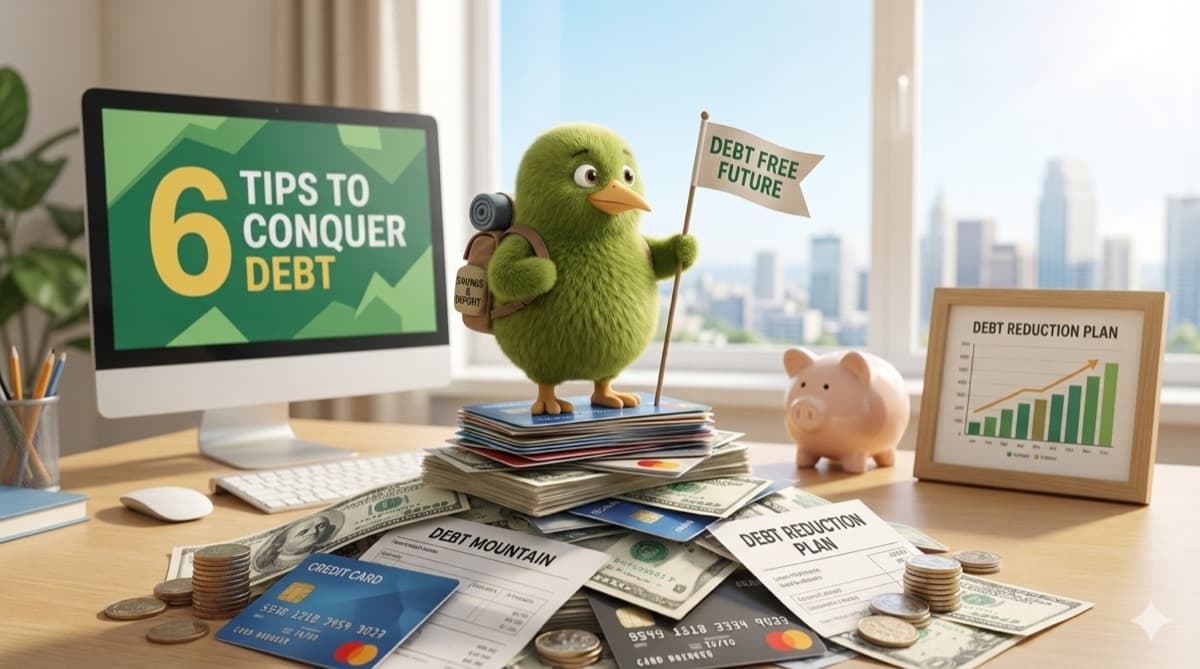
Now that you're armed with the motivation to get on top of your debt, here are our six tips to do it:
1. Create a Budget That Includes a Weekly Debt Repayment
If you are serious about buying your first home, a budget can be a useful part of your plan. A budget can help get a repayment plan on track and once you're at zero debt, these payments can become contributions to your deposit. The key part of budgeting is to include a regular amount for debt repayment. Setting regular repayments can help, but make sure payment timing still leaves enough for essentials and avoids missed payments.
2. Prioritise the Debt with the Highest Interest Rate or Smallest Debt
If you've got debts of various types (credit card, personal loan, hire purchase), prioritise them for focused repayments. Option 1: Prioritise the debt with the highest interest rate to minimise total interest cost. Option 2: Focus on the smallest debt which helps get the ball rolling and encourages you as you tick one debt off the list.
Need personalised guidance?
Chat with a First Home Buyers Club affiliated mortgage adviser - no obligation!
Have a question about this?
Post it in the First Home Buyers Club forum — get answers from the community and industry professionals.
3. Contribute Any Additional Cash to Debt Repayment
From time to time we come into some unexpected money, be it a work bonus or a tax refund. While the temptation is to spend it, consider whether extra cash is best used for high-interest debt, an emergency buffer, deposit savings, or another priority.
4. Make Efforts To Change Spending Behaviour
Getting on top of your debt is really only going to truly work with a committed effort to change the behaviours that got you into debt. Did you buy a new car on finance? A better approach is to re-adjust your sights to a car you can afford to buy from money saved. If you've got credit cards that you struggle to avoid maxing out, consider discussing whether reducing limits, closing unused cards, or changing spending habits makes sense before applying, because timing and lender treatment can matter.
5. Reduce Your Credit Card Limit
If cancelling your cards really isn't an option, then reducing their limits will still have a positive effect on your ability to borrow from the Banks. Reducing your credit card limits can have two effects: firstly reducing your available funds to curb extra spending. Secondly, lenders may assess credit-card limits as an available debt commitment, even if the card is not fully used. The exact treatment varies by lender and application.
6. Look Into Debt Consolidation
- A single loan can make it easier to manage payments and budgeting
- It may mean a lower interest rate
- It is often a loan over a longer period, so the payments may be smaller, but compare fees, total interest, repayment term, and whether the loan actually helps you reduce debt
Have a first-home-buyer question?
Browse related forum discussions
Public forum questions are searchable, with answer previews for visitors and full discussions for free members.
Frequently Asked Questions
Need personalised guidance?
Chat with a First Home Buyers Club affiliated mortgage adviser - no obligation!
Have a question about this?
Post it in the First Home Buyers Club forum — get answers from the community and industry professionals.
Related Articles

A First Home Buyer's Guide to Real Estate Terms and Sale Methods in New Zealand
Essential guide to understanding real estate terms, sale methods, and property jargon for first-home buyers in New Zealand. Learn about auctions, deadline sales, and more.

Buying a Monolithic or Plaster Home in New Zealand: What First Home Buyers Should Know
Essential guide for first-home buyers considering monolithic or plaster homes in New Zealand. Learn about weathertightness, inspections, insurance, and legal protections.

How to Secure a New Build with a 5% Deposit
Learn how first-home buyers can secure a new build in Auckland with just 5% deposit using the First Home Loan scheme and KiwiSaver.

How to Supercharge Your First Home Deposit in New Zealand
Learn proven strategies to accelerate your savings and reach your deposit goal faster with KiwiSaver and smart saving techniques.