Disclaimer:
The information on this website is for general guidance only and does not constitute financial or investment advice. Always seek personalised advice from a qualified mortgage adviser or lawyer before making financial decisions or signing a property contract.
Key Takeaways
- New builds can offer lower maintenance, modern design, and different lending treatment in some cases.
- Off-the-plan, apartments, townhouses, turnkey homes, and construction loans all work differently.
- Low-deposit lending can be available for new builds, but lenders still apply their own rules and risk settings.
- Contract terms, valuation risk, and developer quality matter just as much as price.
- The most suitable new-build pathway depends on your budget, risk tolerance, and how much complexity you can manage.
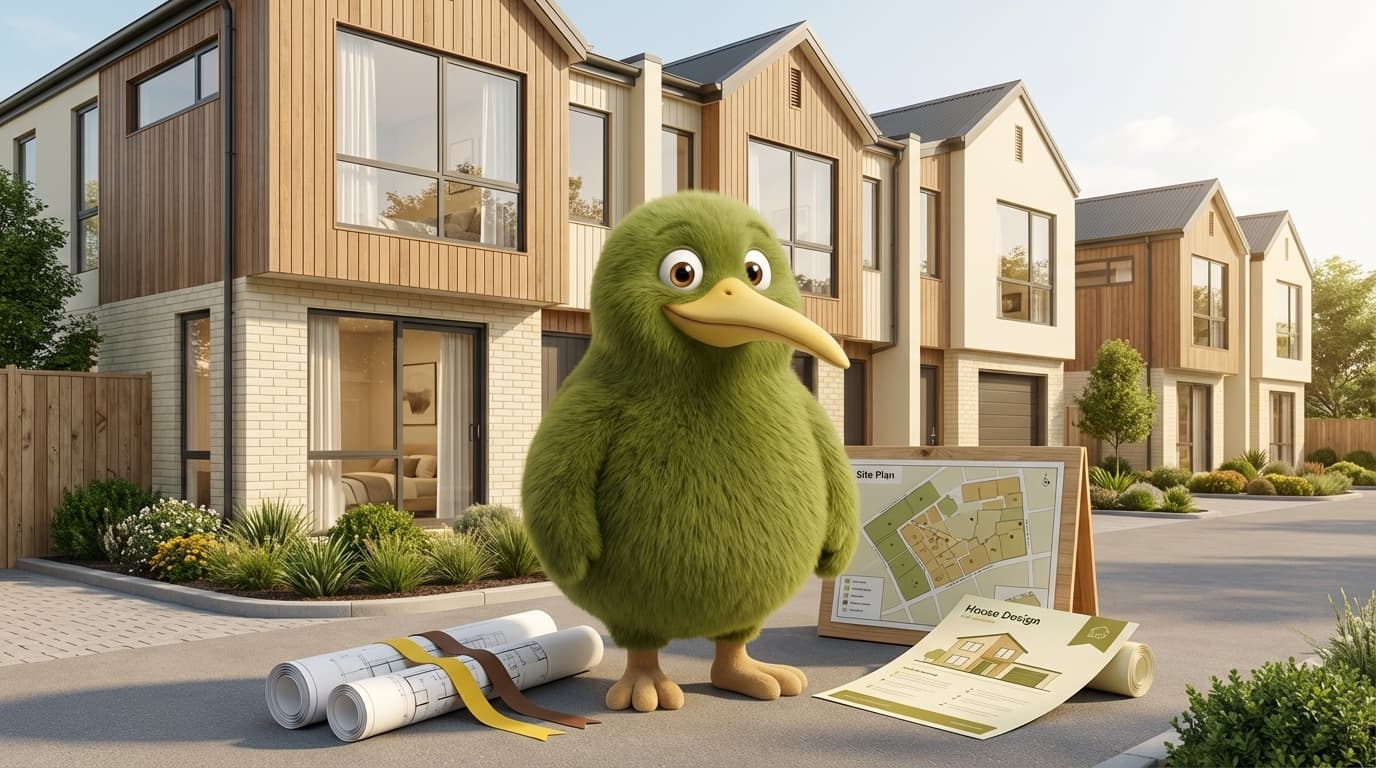
Buying a new build can suit some first-home buyers in New Zealand. You may get a brand-new home, modern materials, lower maintenance, and in some cases different lending treatment from an existing property. But new builds are not one simple category. The risks, timing, and finance process can be very different depending on whether you are buying off the plan, securing a turnkey home, purchasing an apartment, or using a construction loan.
Understanding those differences early can help reduce expensive surprises and help you compare the structure that may best fit your situation.
Why New Builds Appeal to First Home Buyers
New builds are popular because they can solve several common first-home-buyer pain points at once. New homes are usually warmer, more energy efficient, and less likely to need immediate repairs than older stock. That can make the first few years of home ownership more manageable when your budget is already under pressure.
There can also be lending advantages. RBNZ exempts some construction loans and newly built homes purchased from the developer within six months of completion from LVR restrictions. That can give lenders more room, but approval still depends on lender criteria, property details, deposit, income, expenses and servicing.
If you are still working out what you could realistically afford, start with the Mortgage Repayments Calculator and the Budgeting Tool before you commit to a specific build type.
Off-the-Plan Purchases: Buying Before the Home Exists
Buying off the plan means committing to a property before construction is complete, based on plans, renders, specifications, and a contract. This is common with townhouses and apartments in larger developments.
One attraction is that you may agree a price before completion, but the market can move either way. A later valuation, settlement timing, specification changes, and contract terms can all affect the outcome. The finished product may differ from your expectations, completion can be delayed, and the bank may reassess the value at settlement.
⚠️ Watch out
Contract terms matter a lot here. Sunset clauses, completion windows, specification changes, and deposit protections should all be reviewed by a lawyer who understands new build contracts.
Apartment Purchases: Affordability With Extra Layers
Apartments can be one of the more affordable ways into the market, especially in larger centres. But they are not simply “cheaper homes”. They come with extra layers that buyers need to understand, including body corporate levies, long-term maintenance planning, and lender caution around some apartment types.
Some lenders are more conservative with apartments, particularly small units or buildings they regard as riskier. That can affect the deposit required, the amount you can borrow, or whether a lender will consider the property at all.
If you are comparing apartments, review the body corporate information carefully and make sure you understand both the current levies and the future maintenance burden. Our guide to unit title property is a good place to start.
Need personalised guidance?
Chat with a First Home Buyers Club affiliated mortgage adviser - no obligation!
Have a question about this?
Post it in the First Home Buyers Club forum — get answers from the community and industry professionals.
Townhouses: Popular, Practical, but Worth Assessing Carefully
Townhouses remain one of the most common new build pathways for first home buyers. They can sit between affordability, modern design, and manageable maintenance. They may also give buyers access to areas that would be unaffordable for a standalone house.
That said, not every townhouse represents good value. In some areas there has been a large increase in supply, which means buyers have more choice and more leverage than they did when the market was running hotter. That can create opportunity in some areas, but value depends on location, supply, design, build quality, body-corporate or residents-society settings, parking, storage, natural light and resale appeal.
A townhouse can suit some first-home buyers, but it still needs to fit your lifestyle and budget beyond just the headline price.
Turnkey Properties: Simpler Structure, Still Check the Contract
Turnkey homes are popular because they simplify the process. In a typical turnkey structure, you pay a deposit upfront and the balance is settled when the home is complete. You are not managing progressive drawdowns during the build, which can be a major relief if you are also paying rent.
Turnkey purchases may offer clearer pricing than a self-managed build, but buyers still need to check inclusions, exclusions, variation clauses, sunset dates, finance timing, and settlement conditions.
However, “turnkey” does not always mean absolutely everything is included. It is still important to confirm whether fencing, landscaping, curtains, appliances, driveways, or other finishing items are included in the package.
Construction Loans: More Flexibility, More Complexity
Construction loans are usually the most complex new-build pathway. Funds are drawn in stages as work progresses, and the bank will usually want detailed documentation such as building contracts, plans, consents, insurance details, and progress evidence.
This route can make sense if you want more flexibility over design or are doing a house-and-land package that requires staged funding. But it also means more paperwork, more moving parts, and potentially more financial pressure while the build is underway.
💡 Expert Tip
Some first-home buyers prefer turnkey because there are fewer moving parts. A construction loan may suit some buyers, but it brings staged funding, documentation, insurance, build-timing, and budget-management requirements.
Need personalised guidance?
Chat with a First Home Buyers Club affiliated mortgage adviser - no obligation!
Have a question about this?
Post it in the First Home Buyers Club forum — get answers from the community and industry professionals.
Low Deposit Lending and First Home Loan
One reason new builds are so attractive is that they can open up lower-deposit pathways. Kāinga Ora’s First Home Loan may allow eligible buyers to purchase with a 5% deposit through selected lenders, and some new-build or construction lending may be treated differently under RBNZ LVR settings. Neither pathway guarantees approval.
But this is not a free pass. The lender still needs to be comfortable with your income, spending, debts, credit history, and the property itself. Low-deposit lending can also come with tighter servicing scrutiny and potentially higher costs depending on the loan structure.
If you want to check how mortgage payments might feel at different loan sizes, use the Mortgage Repayments Calculator and compare that with your real-world spending using the Budgeting Tool.
Developer Research Is Not Optional
When you buy a new build, you are not only buying a property. You are also relying on a developer, builder, and contract structure to do what they say they will do.
Before signing anything, look into the developer’s track record, previous projects, online reviews, delivery history, and the quality of finished homes. Your lawyer can help with the contract, but your own due diligence matters too.
Stronger research upfront can help you spot risks earlier, but it cannot remove all risk of delays, workmanship issues, finance changes, or settlement surprises.
Other Things to Consider Before You Commit
- Timing: build delays are common and can affect your rental plans, finance timing, and stress levels.
- Valuation: especially for off-the-plan purchases, a later valuation may matter just as much as the original purchase price.
- Insurance: the insurance setup can differ between construction loans and turnkey purchases, so check this early.
- Neighbourhood maturity: new developments may take time before transport links, shops, and community feel catch up.
- Suitability: the cheapest option is not always the one that best fits your life over the next few years.
If you want a clearer picture of where you sit right now, take the Home Readiness Quiz and then book a time with an adviser if you want help comparing available pathways.
Making the Right Choice for Your Situation
There is no one new-build type that suits every first-home buyer. Off-the-plan purchases can offer opportunity, but they bring uncertainty. Apartments can improve affordability, but they require extra care around lending and body corporate issues. Turnkey homes offer simplicity and certainty. Construction loans offer flexibility, but at the cost of complexity.
A suitable option depends on your deposit, your risk tolerance, your cash-flow buffer, and how involved you want to be in the process. The more clearly you understand those trade-offs, the more clearly you can compare your options.
Have a first-home-buyer question?
Browse related forum discussions
Public forum questions are searchable, with answer previews for visitors and full discussions for free members.
Frequently Asked Questions
Need personalised guidance?
Chat with a First Home Buyers Club affiliated mortgage adviser - no obligation!
Have a question about this?
Post it in the First Home Buyers Club forum — get answers from the community and industry professionals.
Related Articles
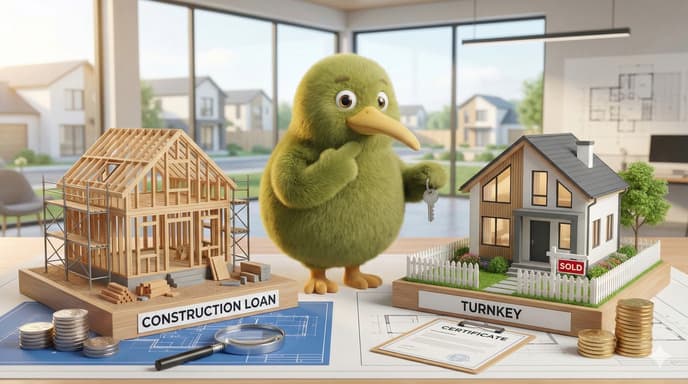
New Builds: Construction Loan vs Turnkey – What First Home Buyers Need to Know
Complete guide for first-home buyers comparing construction loans and turnkey packages in New Zealand. Learn about costs, risks, and which option is right for you.
How to Secure a New Build with a 5% Deposit
Learn how first-home buyers can secure a new build in Auckland with just 5% deposit using the First Home Loan scheme and KiwiSaver.
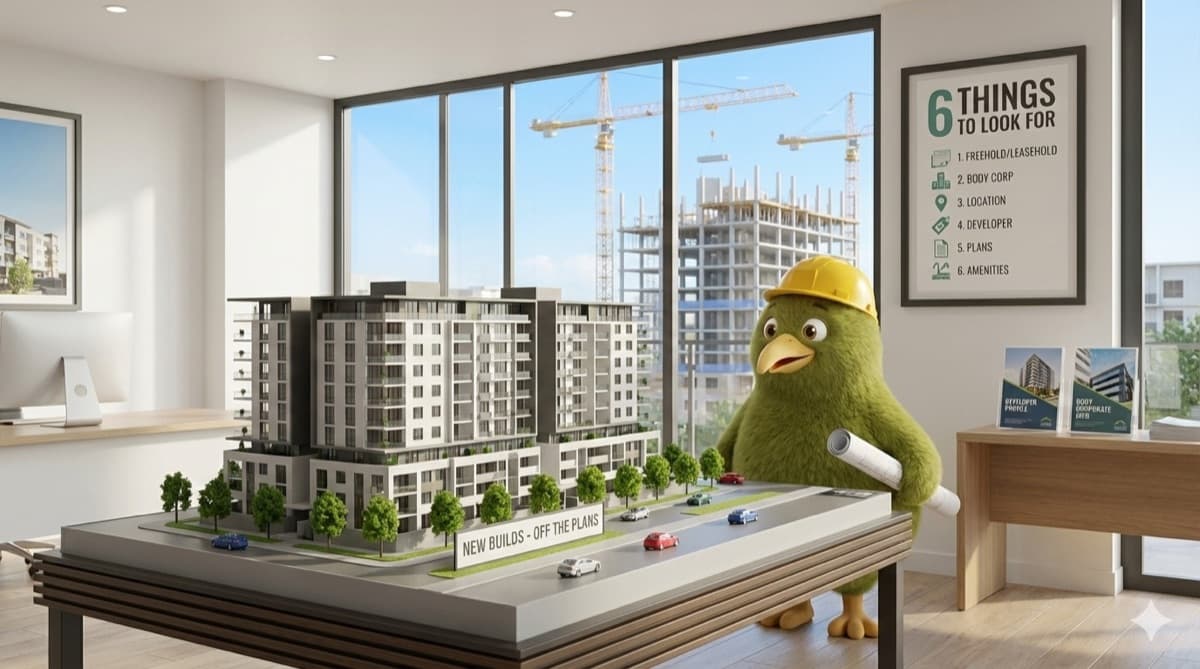
Buying An Apartment Off The Plans - 6 Things To Look For
Essential guide for first-home buyers considering an apartment off the plans. Learn about body corporate, sunset clauses, and due diligence.

New Build vs Existing Properties: Pros and Cons for First Home Buyers in New Zealand
Comprehensive guide comparing new builds and existing properties for first-home buyers in New Zealand. Learn about costs, maintenance, location, and which option suits you best.