Disclaimer:
The information on this website is for general guidance only and does not constitute financial or investment advice. Always do your own research and seek personalised advice from a qualified financial adviser or mortgage adviser before making financial decisions. All investments carry risk and past performance is not indicative of future results.
Key Takeaways
- Set a clear savings goal and timeline, then check it against your actual budget.
- Track spending habits with a budget and realistic allowances.
- Small automatic savings habits, such as round-up tools or separate savings accounts, can help when they fit your budget.
- Reduce non-essential expenses to free up savings.
- A pause before impulse spending can redirect some money towards your deposit, but it works best as part of a realistic plan.
We understand that saving for a deposit can be one of the biggest hurdles for first home buyers, and that's why The First Home Buyers Club is here to lend a helping hand.
First things first though, it helps to understand how much money you spend weekly and what deposit range you are aiming for. Sorted describes a budget as a plan for spending and saving, and its tools can help you check whether money is available to put towards a goal. Pick a realistic number, set a timeframe, and then start tracking your progress.
We'd like to share with you some ways you can make saving easier and hopefully reach your savings target quicker than you expected!
1. Set A Savings Goal
When working towards any goal, it is easier to stay on track with a plan. Start with a budget and separate essential spending from discretionary spending so you can see where savings may be realistic. Sorted's budget planner highlights surplus, shortfall and non-essential spending, which can help you decide how much you can afford to save regularly.
TIP: A good way to be mindful of your spending is taking out cash to spend on your discretionary spending. This way you can see your money being spent instead of it being on a bank statement. Remember to be realistic with your plan - you must still allow yourself some luxuries - if you don't you may find it just too hard and give up.
Check out our blog on 7 Steps to creating a monthly budget.
2. Save Your Change
"Look after the cents and the dollars take care of themselves." There are two ways to save your change: in your banking app or by saving your loose coins.
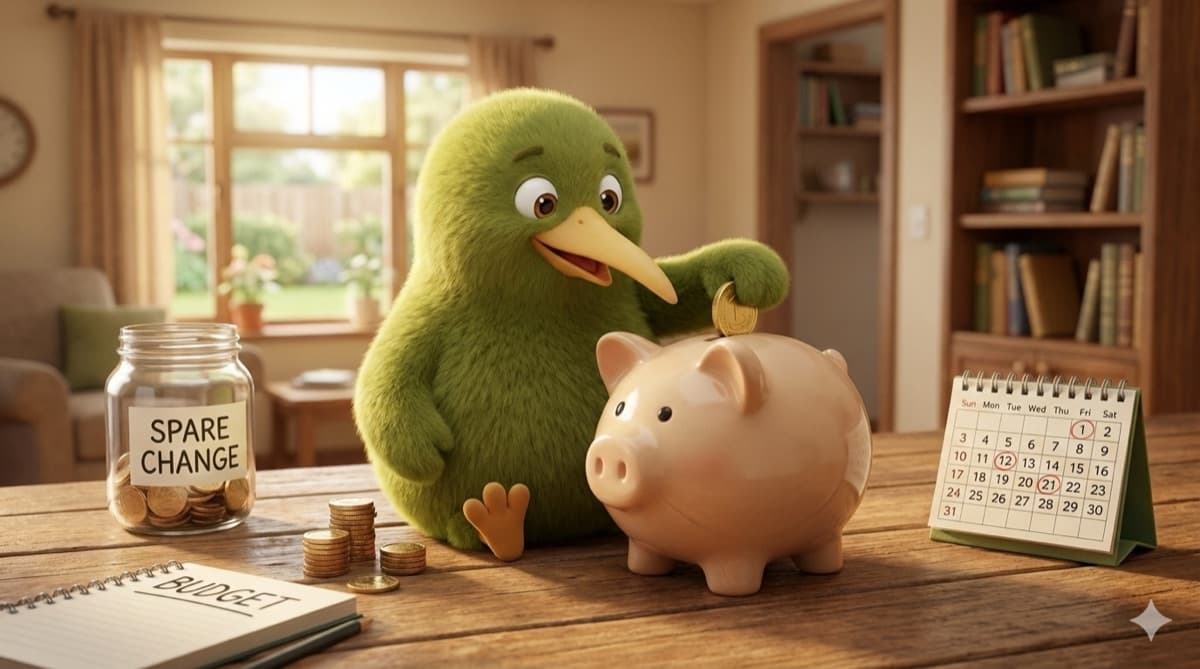
Do you remember as a kid you would have a change jar and save your coins to buy toys? Well, you may not think a lot about loose change, but it can have a big impact on your savings. Every time you take out cash for your discretionary spending put the leftover change from that cash in a jar. Watching the jar fill up over time will be satisfying to see and help keep those mindful habits with your discretionary spending.
Digital Option: some banks offer round-up tools that move small amounts into savings automatically. ASB's Save the Change, for example, rounds selected EFTPOS, Visa Debit and electronic payments from an ASB Everyday account to a chosen amount and deposits the difference into a selected ASB savings account. Check the account terms and make sure the round-up amount fits your budget.
3. Create A Milestone Timeline
Every milestone deserves a celebration in your life and that includes your savings account. Create an achievable timeline that has key milestones along the way. Take the time to understand what you want to achieve with this timeline and why you are doing it.
TIP: Put your milestone timeline somewhere visible that you will see a couple of times a day like on your fridge or pantry. Make hitting those milestones both satisfying and fun by being able to see how much money you have currently saved. Then treat yourself to something when you do hit those key milestones and use your jar of loose change to buy that treat!
Need personalised guidance?
Chat with a First Home Buyers Club affiliated mortgage adviser - no obligation!
Have a question about this?
Post it in the First Home Buyers Club forum — get answers from the community and industry professionals.
4. What Could Be Eliminated?
If you're struggling to save as much money as you need it might be a good idea to look at your weekly expenses. Going through your bank statement and identifying expenses that are non-essential is a good start to seeing what you can spend less on.
Simple Ways to Reduce Spending:
- Compare own-brand or alternative products where they are genuinely cheaper
- Buy a bar of soap instead of body wash
- Compare Woolworths or supermarket own-brand oats with premium alternatives
- Compare Pam's or other supermarket own-brand flour with premium alternatives
- Consider a separate savings account if it helps you avoid dipping into deposit savings
5. Temptation To Buy
The temptation to keep up with the latest fashion trends, go to fancy restaurants and get a drink with your friends on the weekend can lead to unnecessary spending.
The 30-Day Rule:
If you are tempted to buy something, follow the 30-day rule. Take out the money you may want to spend on this item in cash. Instead of spending money on something you want, you're going to take 30 days to think about it. If after 30 days you still want to make the purchase then do it and if not, you are able to add that cash to your savings jar.
6. Read Books On Saving And Finance
If you need motivation or feel uninspired about saving, independent money guides, books, calculators and videos can be useful prompts. Keep the advice in context though: overseas books, social videos and generic personal-finance tips may not reflect New Zealand lending, KiwiSaver, tax or consumer-credit rules.
Resource idea: start with New Zealand resources such as Sorted, MoneyTalks or your lender/adviser, then treat books and videos as general education rather than personalised financial advice.
7. Low Deposit Options
There may be low-deposit pathways when buying your first home, so do not assume a 20% deposit is the only possible route. The options are conditional, and approval still depends on the lender, your income, debts, credit history, deposit source and the property.
A 20% deposit remains a common target because Kāinga Ora says most lenders currently require at least 20%. Some low-deposit routes exist: First Home Loan can lower the required deposit to 5% for eligible buyers, and RBNZ LVR rules include an exemption for qualifying construction or purchase of a new residential dwelling. Those rules do not force a lender to approve a low-deposit loan, so check the specific lender and property criteria before relying on them.
Have a first-home-buyer question?
Browse related forum discussions
Public forum questions are searchable, with answer previews for visitors and full discussions for free members.
Frequently Asked Questions
Need personalised guidance?
Chat with a First Home Buyers Club affiliated mortgage adviser - no obligation!
Have a question about this?
Post it in the First Home Buyers Club forum — get answers from the community and industry professionals.
Related Articles

A First Home Buyer's Guide to Real Estate Terms and Sale Methods in New Zealand
Essential guide to understanding real estate terms, sale methods, and property jargon for first-home buyers in New Zealand. Learn about auctions, deadline sales, and more.

Buying a Monolithic or Plaster Home in New Zealand: What First Home Buyers Should Know
Essential guide for first-home buyers considering monolithic or plaster homes in New Zealand. Learn about weathertightness, inspections, insurance, and legal protections.

How to Secure a New Build with a 5% Deposit
Learn how first-home buyers can secure a new build in Auckland with just 5% deposit using the First Home Loan scheme and KiwiSaver.

How to Supercharge Your First Home Deposit in New Zealand
Learn proven strategies to accelerate your savings and reach your deposit goal faster with KiwiSaver and smart saving techniques.