Disclaimer:
The information on this website is for general guidance only and does not constitute financial or investment advice. Always do your own research and seek personalised advice from a qualified financial adviser or mortgage adviser before making financial decisions. All investments carry risk and past performance is not indicative of future results.
Key Takeaways
- A will records how you want your estate dealt with, but property ownership type still matters.
- Without a will, your estate is distributed under intestacy rules.
- Wills can record preferred guardians, gifts, funeral wishes and charity bequests.
- Review a will when property, relationships or family circumstances change.
- Legal advice can help align estate planning with your property ownership and family circumstances.
The team at Schnauer & Co have put together a resource toolkit to highlight common legal issues first-home buyers should discuss with professionals. In this Part 5 of the series, we talk about wills and why they matter when a first home becomes part of your estate planning.
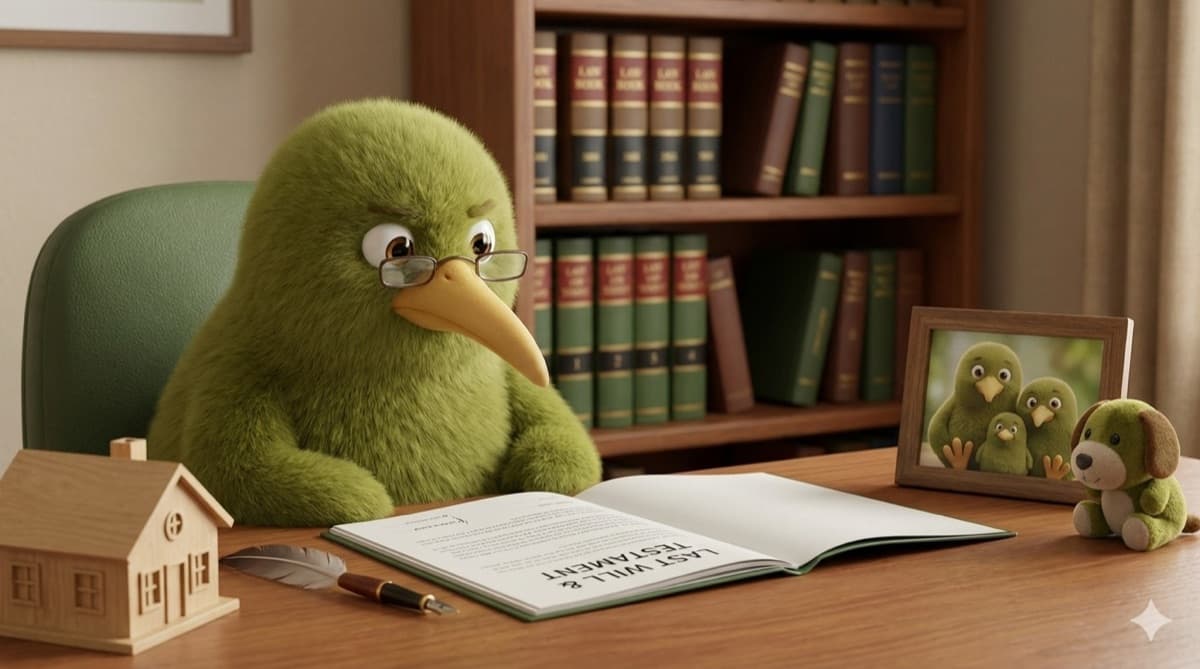
The Importance Of A Will
A will lets you say how you want your property dealt with when you die. Buying a first home, having children, entering or leaving a relationship, or changing how property is owned are all sensible times to review whether your will still fits your circumstances.
A Will Allows You To Express Your Wishes Concerning:
- Whether you would like to be buried or cremated
- Any special funeral arrangements
- How estate property should be dealt with on death
- Special bequests in relation to property
- Gifts to charities
- Preferred guardians for your children, noting guardianship issues may still need legal process
- Who will look after your pets (for example, if you have two cats, you can state in your Will that your preference is for them to remain a bonded pair after your death)
What Happens Without A Will?
Important: If you die without a will, you are described as dying intestate. Govt.nz says the person dealing with the estate is usually an administrator, and Public Trust says larger estates generally need High Court letters of administration before assets can be collected, debts paid and the remaining estate distributed under New Zealand law. The outcome depends on your family circumstances.
Need personalised guidance?
Chat with a First Home Buyers Club affiliated mortgage adviser - no obligation!
Have a question about this?
Post it in the First Home Buyers Club forum — get answers from the community and industry professionals.
Have a first-home-buyer question?
Browse related forum discussions
Public forum questions are searchable, with answer previews for visitors and full discussions for free members.
Frequently Asked Questions
Need personalised guidance?
Chat with a First Home Buyers Club affiliated mortgage adviser - no obligation!
Have a question about this?
Post it in the First Home Buyers Club forum — get answers from the community and industry professionals.
Related Articles
A First Home Buyer's Guide to Real Estate Terms and Sale Methods in New Zealand
Essential guide to understanding real estate terms, sale methods, and property jargon for first-home buyers in New Zealand. Learn about auctions, deadline sales, and more.
Buying a Monolithic or Plaster Home in New Zealand: What First Home Buyers Should Know
Essential guide for first-home buyers considering monolithic or plaster homes in New Zealand. Learn about weathertightness, inspections, insurance, and legal protections.

How to Secure a New Build with a 5% Deposit
Learn how first-home buyers can secure a new build in Auckland with just 5% deposit using the First Home Loan scheme and KiwiSaver.

How to Supercharge Your First Home Deposit in New Zealand
Learn proven strategies to accelerate your savings and reach your deposit goal faster with KiwiSaver and smart saving techniques.