Disclaimer:
The information on this website is for general guidance only and does not constitute financial or investment advice. Always do your own research and seek personalised advice from a qualified financial adviser or mortgage adviser before making financial decisions. All investments carry risk and past performance is not indicative of future results.
Key Takeaways
- Cross leases combine shared land ownership with individual leases.
- Out-of-date flats plans can create title, lending, insurance, and resale issues.
- Compare the Flats Plan with the actual property.
- Check consents and written approvals for alterations.
- Review the lease terms and get legal advice on title or disclosure issues.
Navigating the world of property ownership can be challenging, especially when it comes to understanding unique ownership structures like cross-lease properties. In this article, Schnauer & Co explore the ins and outs of cross-lease arrangements, highlighting potential hurdles buyers might discuss with their lawyer or conveyancer before making decisions.
As a first-home buyer, this guide gives general context for the title and lease issues to check before relying on a cross-lease property.
What is a Cross Lease Property?
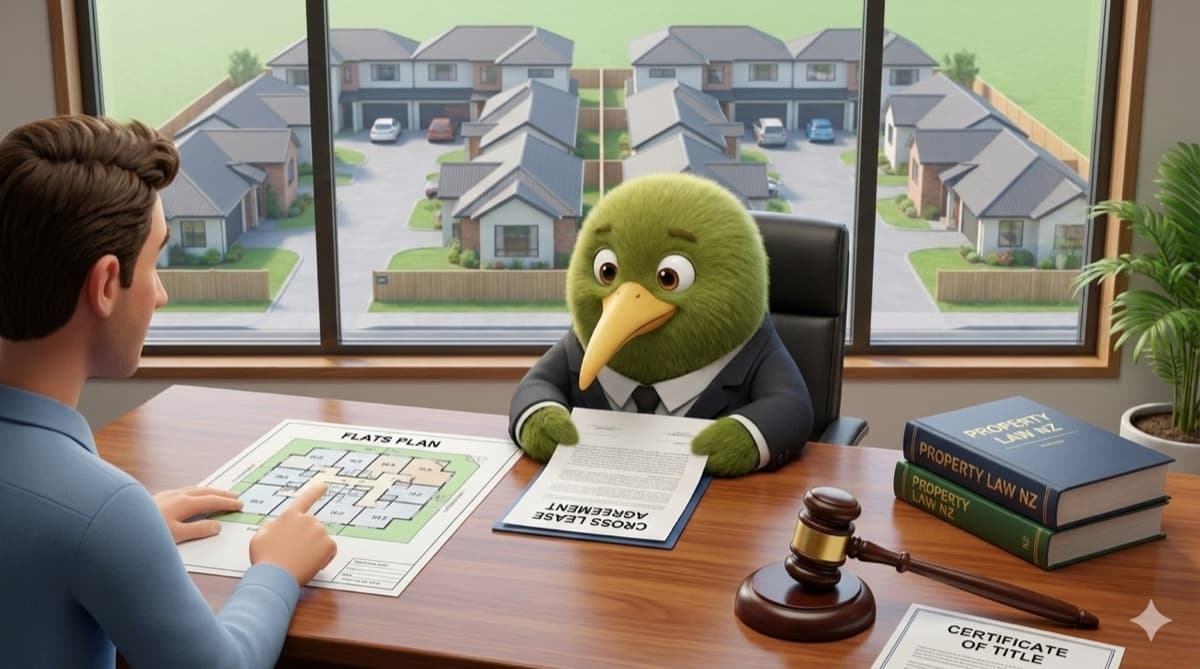
A cross lease is a form of ownership where you hold a share of the freehold title with the other cross leaseholders, plus a leasehold interest in the area and building you occupy.
Cross leases were created to avoid having to undertake a full subdivision and save costs. The "flats" sit on what is known as the "Flats Plan". Each owner "leases" a specific area from the other owners (normally for 999 years at 10 cents per annum).
Simply put: All flat owners on the Flats Plan jointly own the land as to an undivided share and each flat owner owns an equal undefined share in the underlying fee simple title. Then each flat owner has a lease registered which relates to the relevant flat (flat owners all lease their exclusive rights to occupy the flat from the other flat owners).
This arrangement is all set out in the lease which is registered on the title and it refers to the specific Flats Plan which was prepared by a surveyor. The Flats Plan shows the outline of the structures (flats and any carports or garages) and then the boundaries for each owner's "exclusive use areas" unless it is an older form of cross lease which does not provide exclusive use areas.
Need personalised guidance?
Chat with a First Home Buyers Club affiliated mortgage adviser - no obligation!
Have a question about this?
Post it in the First Home Buyers Club forum — get answers from the community and industry professionals.
Older forms of leases can cause disputes between owners in relation to the "common property" areas being used without consideration for other owners. Also, if a flat owner has undertaken changes to the outline of the flat when there are no exclusive use areas, this can make it harder to obtain retrospective consent from other flat owners.
Defective Cross Lease Titles
A cross lease flats plan may be defective or out of date if alterations to the property footprint have not been included. Depending on the agreement wording and legal advice, this can raise title, lending, insurance, disclosure or cancellation issues. Buyers should check the title, flats plan, lease and any council records before signing, or use conditions that give enough time for those checks.
Important:
Prospective purchasers should compare the flats plan with the property they inspect, including the building footprint, exclusive-use areas and common/shared areas.
If there is an additional structure or extension, check whether council consent, code compliance documentation or earlier permits were required, and ask your lawyer whether the other cross leaseholders needed to consent. Depending on the circumstances, the issue may also need to be checked with your lender and insurer.
Lease Instruments
Lease instruments registered on cross lease titles are important documents which should be reviewed by prospective purchasers. The lease dictates the relationship between the owners of all of the properties within the Flats Plan. There are generally standard forms of lease that are used. Review the lease because standard forms may be amended and the registered terms matter.
The lease states what types of activities the owner is allowed to undertake. It also defines what works the owner must obtain consent from the other cross lease owners for. It also may state that other flat owners cannot "unreasonably withhold consent" which is particularly relevant if you plan to make changes to the flat.
What to Consider When Selling a Cross Lease Property
The standard vendor warranties are of relevance to owners of cross lease properties when contemplating selling, if there are unauthorised structures in respect of the cross lease. In addition to the potential lack of Council consent, there could be a defective title and potentially a breach of the lease to consider when going over your disclosure obligations.
This is when general terms may need to be deleted, an addition of a disclosure clause in the further terms or the agent may provide direct disclosure to all prospective purchasers which should be acknowledged prior to accepting an offer or prior to an auction.
Disclosure Requirements:
- Any notice received from one of your cross lease neighbours
- Any consent signed in respect of works undertaken on the flats plan (retrospective consent)
- Any works the other flat owners intend to undertake (as it binds future purchasers)
Disclosure requirements should be addressed before offers are accepted to ensure that a vendor doesn't breach any vendor warranties and to ensure that the title cannot be requisitioned due to a defect.
Cross leases can be confusing, so get legal advice and disclose known matters that may affect the title, lease, council records or the property you are selling.
If an extra structure is on common property such as a shared driveway or on an old cross lease with no exclusive use areas, then this may be an issue. This is because one of the flat owners has attempted to take exclusive use of an area that is supposed to be common property, and they have breached the lease which can cause a defective title. This is when we would need to investigate the status of those works and if other flat owners were consulted.
Attached or Enclosed Structures on a Cross Lease Property
A useful legal question is whether a structure is attached, enclosed, or changes the building footprint shown on the flats plan. The answer and the structure location can affect what checks are needed.
Common additions are lean-to garage (attached) or a floating deck in an entertainment area which is attached to the flat. Or a problematic one is a fully enclosed and attached conservatory to create an extra room or a carport which now has a garage door, so it is fully enclosed with sides. Or sometimes it is simply a stand-alone garden shed.
Structure Rules:
- Not attached to the dwelling: The lease just requires that written consent from the other flat owners is obtained.
- Attached but not enclosed (e.g. decks or carports): Same applies regarding the written consent required. However, purchasers need to consider if the works are up to the Building Code and that they did not require building consent due to the height.
- Attached and enclosed or footprint-changing: there may be an issue if the property no longer matches the flats plan. Get legal advice on whether the title or flats plan is defective or needs updating.
Updating a flats plan or converting a cross lease to fee simple can involve legal, survey and council/subdivision steps, and may require agreement from the other owners. Costs and timing depend on the property and local requirements.
Have a first-home-buyer question?
Browse related forum discussions
Public forum questions are searchable, with answer previews for visitors and full discussions for free members.
Frequently Asked Questions
Need personalised guidance?
Chat with a First Home Buyers Club affiliated mortgage adviser - no obligation!
Have a question about this?
Post it in the First Home Buyers Club forum — get answers from the community and industry professionals.
Related Articles

A First Home Buyer's Guide to Real Estate Terms and Sale Methods in New Zealand
Essential guide to understanding real estate terms, sale methods, and property jargon for first-home buyers in New Zealand. Learn about auctions, deadline sales, and more.

Buying a Monolithic or Plaster Home in New Zealand: What First Home Buyers Should Know
Essential guide for first-home buyers considering monolithic or plaster homes in New Zealand. Learn about weathertightness, inspections, insurance, and legal protections.

How to Secure a New Build with a 5% Deposit
Learn how first-home buyers can secure a new build in Auckland with just 5% deposit using the First Home Loan scheme and KiwiSaver.

How to Supercharge Your First Home Deposit in New Zealand
Learn proven strategies to accelerate your savings and reach your deposit goal faster with KiwiSaver and smart saving techniques.