Disclaimer:
The information on this website is for general guidance only and does not constitute financial or investment advice. Always do your own research and seek personalised advice from a qualified financial adviser or mortgage adviser before making financial decisions. All investments carry risk and past performance is not indicative of future results.
Key Takeaways
- House and land packages can involve staged build payments and more build-contract involvement.
- Turnkey packages are often marketed with upfront pricing and the main balance due at settlement, but the contract terms still matter.
- House and land packages may offer more design and plot choice, depending on the development and builder.
- Turnkey may offer a simpler path, but buyers still need to check inclusions, exclusions, settlement timing, and variations.
- Compare costs, timelines, contract terms, lender criteria, and legal risk before choosing.
When you're on the journey to buying your first home, understanding the different types of building packages available can make a big difference to the questions you ask. Two common options you'll come across are House & Land packages and Turnkey packages. This guide explains the usual differences, while noting that the contract, lender criteria, and legal advice matter for the specific property.
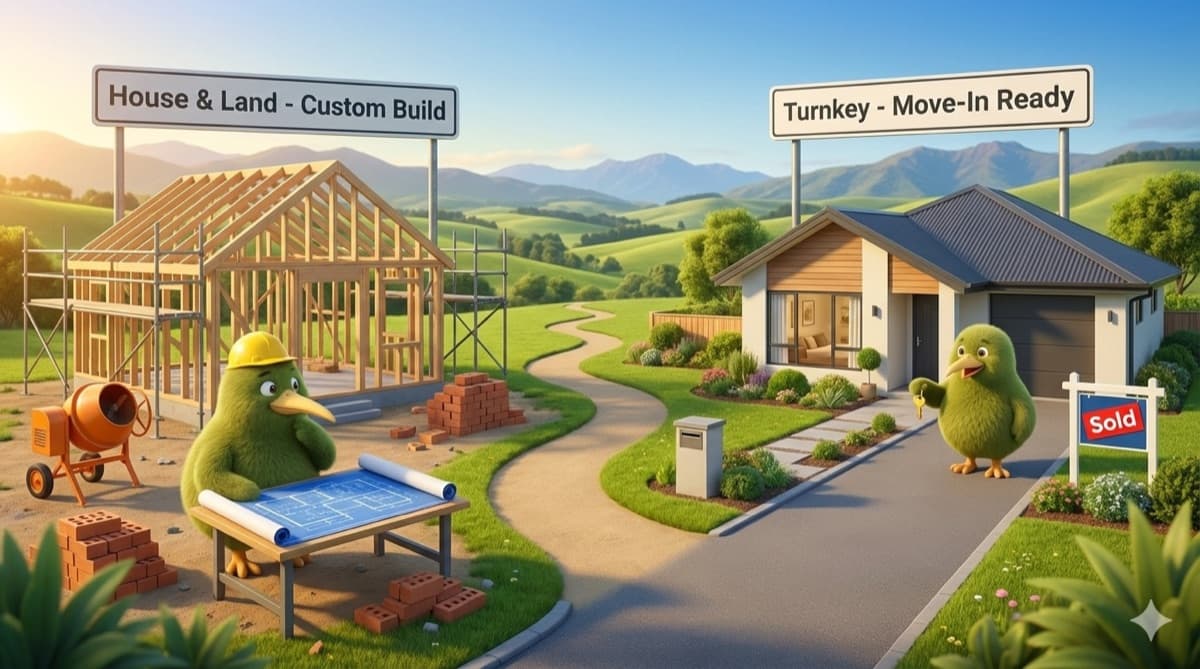
House and Land Packages
What Are They?
House and Land packages usually involve buying a section or lot and entering into a build arrangement for the home. They are often offered by developers or builders with available lots and a range of house designs, but the legal structure and payment terms can vary by project.
How Do They Work?
- Choose the land: You may select a block of land from available plots in a development, subject to the developer's sale process and title/settlement terms.
- Select a home design: You may choose from standard layouts or available custom options, depending on the builder, consent pathway, budget, and development rules.
- Construction phase: Once design, contract, finance, consent, and settlement conditions are in place, construction can begin. Payments may be staged as the build progresses, depending on the contract and lender approval.
Pros of House & Land Packages:
Need personalised guidance?
Chat with a First Home Buyers Club affiliated mortgage adviser - no obligation!
Have a question about this?
Post it in the First Home Buyers Club forum — get answers from the community and industry professionals.
- Customisation: You may have flexibility to choose a design or request modifications, subject to the builder, contract, budget, consents, and development rules.
- Location choice: You may be able to select a specific plot within a development, giving you some control over location, title type, and orientation.
Turnkey Packages
What Are They?
Turnkey packages are often presented as a more straightforward path to a new build. Usually you sign a sale and purchase/build contract, pay a deposit, and pay the main balance at settlement once the home is complete. The level of price certainty depends on the contract wording, inclusions, exclusions, and any agreed variations.
How Do They Work?
- Sign the contract: You enter into the relevant sale and purchase or build contract with the developer or builder. Check exactly what the price includes, what is excluded, and how variations are handled.
- Pay a deposit: You typically pay a deposit under the contract to secure the package, with the amount and timing set by the agreement and lender criteria.
- Construction phase: The developer or builder manages the build. You may have fewer progress-payment decisions than a staged construction loan, but you still need to track contract milestones, completion, insurance, and settlement risk.
- Settlement and move-in: Once the home is complete and settlement conditions are met, you pay the remaining balance, receive the keys, and move in according to the settlement arrangements.
Pros of Turnkey Packages:
- Convenience: Turnkey homes are often sold as completed homes with specified inclusions such as landscaping, driveways, or appliances. Check the inclusions schedule carefully before relying on what is included.
- Upfront pricing: The price is set in the contract, but unexpected costs can still arise if the scope changes, exclusions apply, or variations are agreed. Check the contract and quote details before relying on price certainty.
- Loan timing: With many turnkey purchases the main home loan is drawn at settlement, which may reduce construction-period cash-flow pressure. Confirm the loan structure, deposit timing, and any fees with the lender.
Learn More: New Builds in New Zealand: Construction Loan vs Turnkey
Feature comparison: House and Land packages may offer more customisation and can involve staged progress payments, more buyer involvement, and possible variations. Turnkey packages may offer fewer design choices, a deposit plus final settlement balance, and a simpler drawdown structure, but the contract and lender criteria decide the actual risk.
Legendary Homes Turnkey Packages
- Location claims: Check the specific development location, amenities, school zones, transport links, title, and settlement terms before relying on marketing claims.
- Construction timeline: Ask for the promised timeline in writing, including what happens if consent, supply, weather, inspection, or other delays occur.
- Quality assurance: Ask what standards, warranties, inspections, code compliance, and guarantees apply to the specific home.
- Pricing: Check the contract price, inclusions, exclusions, provisional sums, prime cost sums, and variation process before assuming there are no extra costs.
- Finance timing: Confirm deposit, loan approval, settlement timing, and any construction-period costs with your lender.
In conclusion, whether a House and Land package or a Turnkey package is more suitable depends on your needs, timeline, budget, lender approval, and contract terms. If you want a completed new-build path, a turnkey package may be worth comparing, but get legal and lending advice before signing. If you are considering a low-deposit pathway, check current First Home Loan eligibility and participating-lender criteria rather than assuming every new build qualifies.
Developer contact: If you are considering a specific developer package, contact the developer for current availability and ask for the contract, inclusions schedule, warranties, timeline assumptions, and settlement requirements before making a decision.
Have a first-home-buyer question?
Browse related forum discussions
Public forum questions are searchable, with answer previews for visitors and full discussions for free members.
Frequently Asked Questions
Need personalised guidance?
Chat with a First Home Buyers Club affiliated mortgage adviser - no obligation!
Have a question about this?
Post it in the First Home Buyers Club forum — get answers from the community and industry professionals.
Related Articles

A First Home Buyer's Guide to Real Estate Terms and Sale Methods in New Zealand
Essential guide to understanding real estate terms, sale methods, and property jargon for first-home buyers in New Zealand. Learn about auctions, deadline sales, and more.

Buying a Monolithic or Plaster Home in New Zealand: What First Home Buyers Should Know
Essential guide for first-home buyers considering monolithic or plaster homes in New Zealand. Learn about weathertightness, inspections, insurance, and legal protections.
How to Secure a New Build with a 5% Deposit
Learn how first-home buyers can secure a new build in Auckland with just 5% deposit using the First Home Loan scheme and KiwiSaver.

How to Supercharge Your First Home Deposit in New Zealand
Learn proven strategies to accelerate your savings and reach your deposit goal faster with KiwiSaver and smart saving techniques.