Disclaimer:
The information on this website is for general guidance only and does not constitute financial or investment advice. Always do your own research and seek personalised advice from a qualified financial adviser or mortgage adviser before making financial decisions. All investments carry risk and past performance is not indicative of future results.
Key Takeaways
- Define priorities so you can compare homes clearly.
- Choose locations that match lifestyle and budget.
- Use multiple listing sites to widen your search.
- Visit open homes to compare properties and spot issues early.
- Focus on finance approval, budget, due diligence and timing rather than trying to predict the market.
Buying a home is a major milestone, and the process of finding a suitable property can be overwhelming. Once you have a conditional pre-approval or finance plan, understand your budget, and know your deposit position, you can search in a realistic price range.
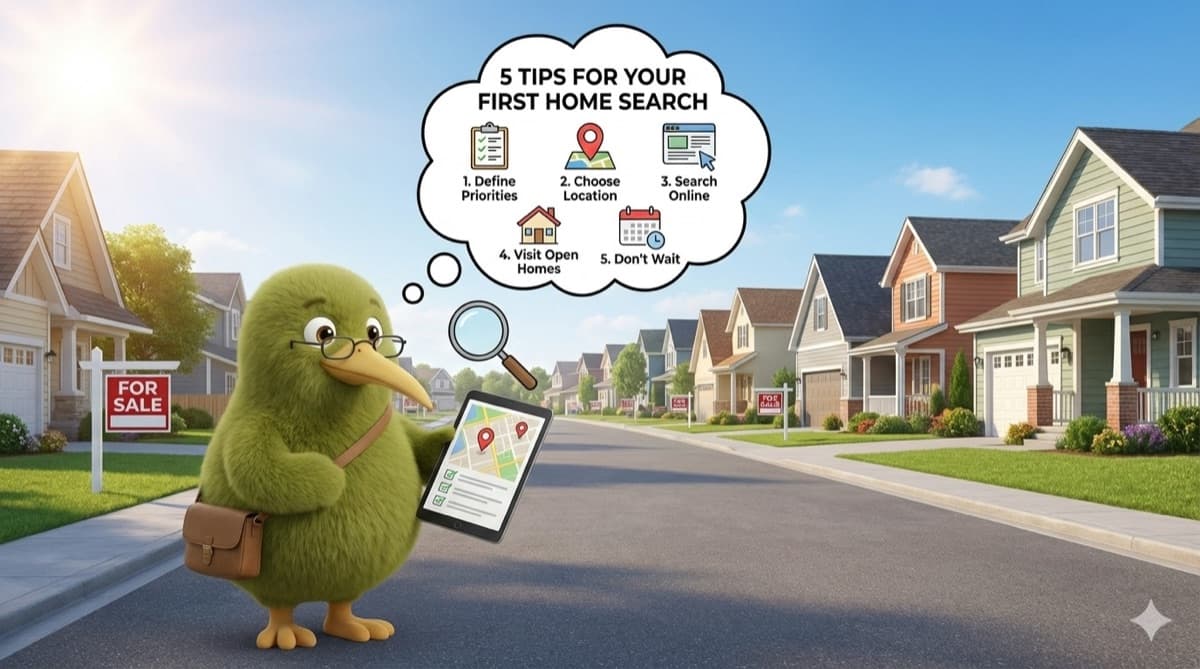
Here are 5 practical tips to help structure your home search.
1. Define Your Priorities
One thing that first home buyers can often get stuck on is that their first home is not likely to be their forever home. This is where some compromises are going to have to be made to get into your first home. To help with this process, write a checklist of your top priorities and keep it next to you when viewing houses online. As you go through a number of properties, you will begin to get an idea of what things are important and what things you are willing to compromise on.
Consider These Factors:
- Size: How many bedrooms and bathrooms do you need? Do you need a home office or a separate guest room?
- Outdoor space: Do you need a large section, or would you prefer an easy-to-maintain site? Do you need space for your pets?
- Storage: How much storage space do you need for items such as clothing and sports equipment?
- Cars: Do you need a lockup garage, a carport, or off-street parking?
- Safety and security: Do you want a home security system, or a gated community for added safety?
- DIY: Are you willing to roll up your sleeves and do some DIY?
2. Choose Your Location
When buying a home, location matters. Think about proximity to schools, shops, transport and other amenities you may require, as well as neighbourhood feel, property risks and future plans for the area. Location can affect daily life and future resale, but it should be assessed alongside budget, due diligence and advice.
Need personalised guidance?
Chat with a First Home Buyers Club affiliated mortgage adviser - no obligation!
Have a question about this?
Post it in the First Home Buyers Club forum — get answers from the community and industry professionals.
Factors to Consider:
- Commute: Consider the distance between your potential new home and your workplace. It's important to factor in the cost and time of commuting.
- Schools: If you have children or are planning to have children, consider the quality of schools in the area. Check out ERO reports for local schools, and perhaps talk to parents in nearby playgrounds.
- Neighbourhood: Do you want a quiet suburban area or a bustling urban area? Look for neighbourhoods with amenities that suit your lifestyle.
- Safety: Look into the crime rates and safety of the area you're considering.
- Future development: Look into council information and future development plans for the area. This can help you understand what may change nearby, but it does not guarantee future value growth.
3. Finding Properties for Sale
Many properties are advertised online, through agencies, or through agent alerts. These are common websites to include in your search:
- OneRoof.co.nz
- Realestate.co.nz
- TradeMe.co.nz
- Homes.co.nz
4. Visit Open Homes
Visiting open homes is a useful step in the house-buying process. Settled.govt.nz says an open home or viewing is a good place to start your property search, check whether a property meets your needs, and identify potential issues before you are too far into the process.
Benefits of Visiting Open Homes:
- Get a sense of the property: See the property in person and get a sense of its layout, size, and condition.
- Check the neighbourhood: Explore the surrounding neighbourhood and get a feel for the community.
- Meet the real estate agent: A listing agent can answer questions about the property and process, but Settled.govt.nz says the real estate agent works for the seller. Treat agent information as useful, then do your own research and get professional advice before making an offer.
- Compare properties: Visiting multiple open homes can help you compare different properties and assess which ones may fit your needs, budget and due-diligence requirements.
- Gain confidence: You can become more familiar with the house-buying process and the questions to ask before getting serious about a property.
5. Don't Wait for the Market
First home buyers often ask, "When is the right time to buy my first home?" A safer starting point is readiness rather than market prediction. Settled.govt.nz says it is important to confirm your finances and have lender approval before you get serious about a property. Budget, deposit, loan conditions, legal checks, insurance and property due diligence all matter before making an offer.
Remember: Housing markets can move up and down, which can feel challenging for first-home buyers. A home is a major long-term commitment, so affordability, loan conditions, property checks, legal advice, insurance and your own plans should guide the decision. If a property looks suitable and affordable, take the time to confirm the details before committing.
Have a first-home-buyer question?
Browse related forum discussions
Public forum questions are searchable, with answer previews for visitors and full discussions for free members.
Frequently Asked Questions
Need personalised guidance?
Chat with a First Home Buyers Club affiliated mortgage adviser - no obligation!
Have a question about this?
Post it in the First Home Buyers Club forum — get answers from the community and industry professionals.
Related Articles

A First Home Buyer's Guide to Real Estate Terms and Sale Methods in New Zealand
Essential guide to understanding real estate terms, sale methods, and property jargon for first-home buyers in New Zealand. Learn about auctions, deadline sales, and more.
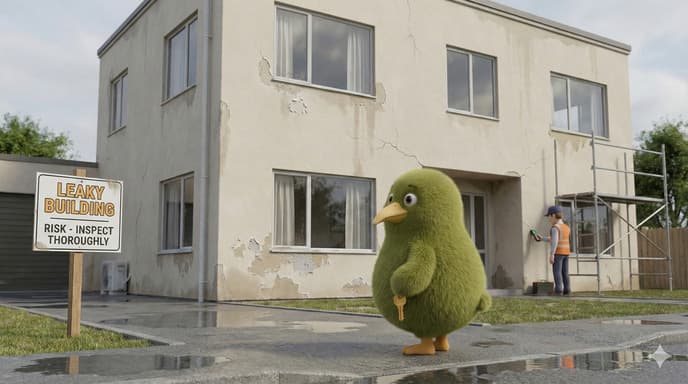
Buying a Monolithic or Plaster Home in New Zealand: What First Home Buyers Should Know
Essential guide for first-home buyers considering monolithic or plaster homes in New Zealand. Learn about weathertightness, inspections, insurance, and legal protections.
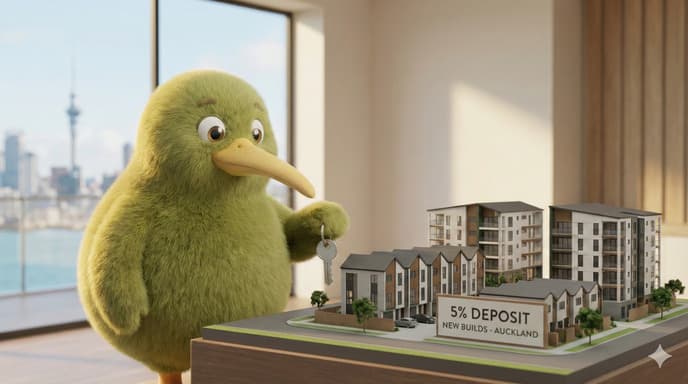
How to Secure a New Build with a 5% Deposit
Learn how first-home buyers can secure a new build in Auckland with just 5% deposit using the First Home Loan scheme and KiwiSaver.

How to Supercharge Your First Home Deposit in New Zealand
Learn proven strategies to accelerate your savings and reach your deposit goal faster with KiwiSaver and smart saving techniques.